What it is
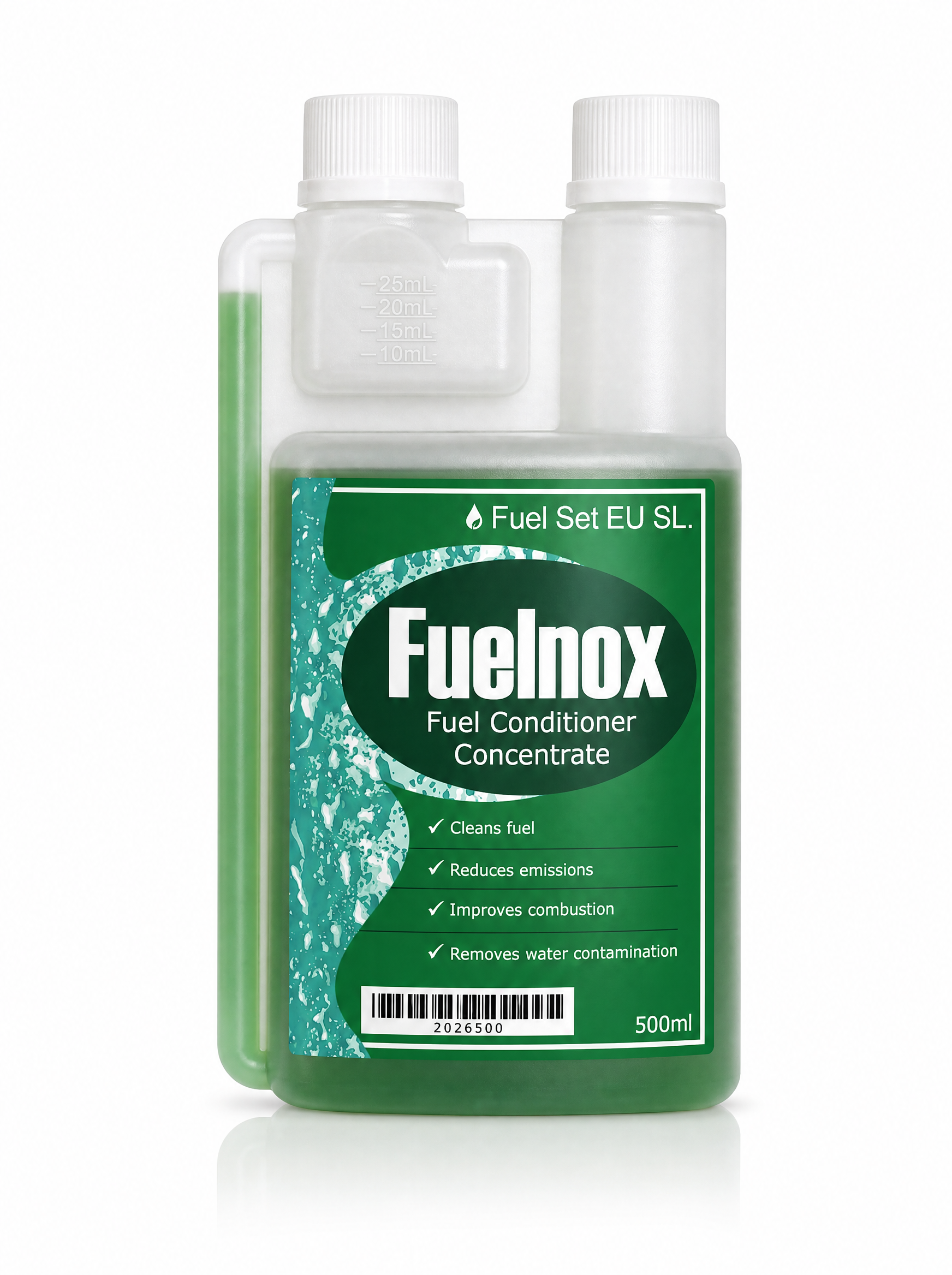
Fuelnox is a fuel conditioner concentrate for diesel, petrol and two-stroke engines. One 10 ml capful treats 40 litres of fuel. It goes in at the filler or into the can, and the fuel carries it through the filter, the pump and the injectors.
What it does
- Clears deposits. Gums and carbon come off injector tips, jets and tank walls under normal running, and dosing each fill keeps the next layer from forming.
- Handles water. Air above the fuel brings moisture in, and it condenses against cold tank walls. Fuelnox holds it in suspension and passes it through the engine rather than letting it gather underneath.
- Keeps fuel usable. Diesel and petrol both go off in store. Treated fuel keeps far better through a long gap between uses.
- Lubricates. A high pressure pump and its injectors take their lubrication from the fuel and from nothing else. Fuelnox adds to what is there.
Cold starting normally shows the change first, then the idle and the pull from low revs. None of this is power the engine never had. It is getting back what the deposits had taken, tank by tank, and a cleaner system also smokes less.
How to use it
Two capfuls per 40 litres the first time you treat an engine, then one capful per 40 litres at every fill after that. A capful is 10 ml.
Add it while the tank is filling, or to the can before it is poured. The turbulence mixes it.
A tank that is already part full is dosed against the volume going in, and it mixes with whatever is already there.
Ahead of a long idle period, use the double dose and run the engine long enough to draw treated fuel through to the injectors. Untreated fuel left standing in the pump and the rails is what causes trouble later.
Keep it to every fill rather than saving it for a lay-up. Deposits accumulate gradually, so the product returns most when it is present continuously.
What it is safe with
Diesel, petrol and two-stroke, with B7, E5 and E10 all included. A single formulation covers the lot, so a mixed yard needs no shelf of different bottles.
Nothing in it attacks seals, hoses, carburettors, catalytic converters or particulate filters, and old indirect injection takes the same ratio as modern common rail. The formulation is ashless and free of sulphur, phosphorus, nitrogen and metallic ingredients, which is the part those components react to.
Overdosing does no harm. There is no ratio to get wrong, and a heavier dose costs nothing but bottle.
What it will not do
It treats fuel and only fuel. Mechanical wear is outside it, and a component that has already failed is not recovered. An injector that has stopped delivering stays that way, and a neglected system clears in stages.
Free water sitting below the fuel needs draining first. Fuelnox works on the water the fuel is holding. That stops a new layer from forming, but it will not clear one that has already settled.
A capful at every fill is the cheap option. The expensive one is injectors out for testing, filters blocking ahead of schedule, and a tank of dead fuel pumped out and taken away.
This size
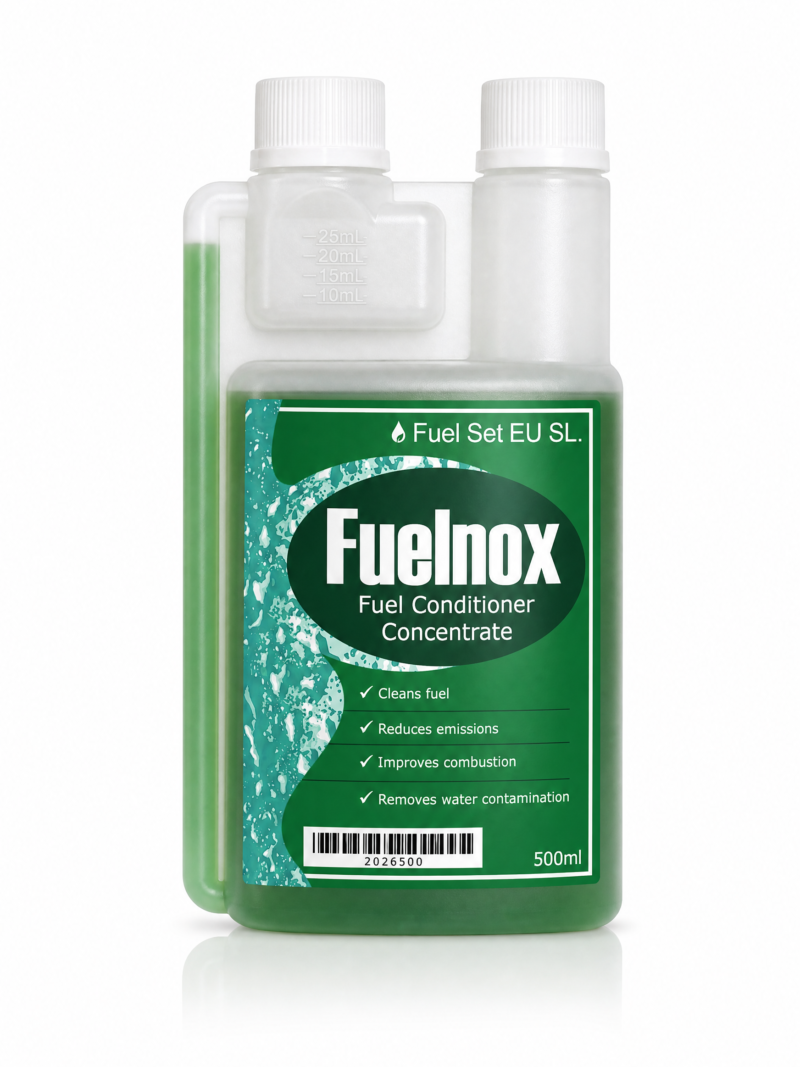
500 ml is 50 capfuls and treats 2,000 litres. That covers one vehicle or one vessel across a full season, or a few engines sharing one bottle. It suits a tank that stands part full between uses, because the empty space above the fuel is what lets damp air in. Where one bottle has to cover several engines all year, the 1 litre is the one that lasts.
Where it is used
| Where | What it goes in | Fuel |
|---|---|---|
| Marine | Inboards, outboards, auxiliaries, tenders | Diesel, petrol |
| Agriculture | Tractors, telehandlers, sprayers | Diesel |
| Road | Vans, pickups, motorhomes, cars | Diesel, petrol |
| Standby power | Generators, fire pumps | Diesel |
| Grounds | Mowers, saws, strimmers | Petrol, two stroke |
Sizes and coverage
| Size | Suits | Treats |
|---|---|---|
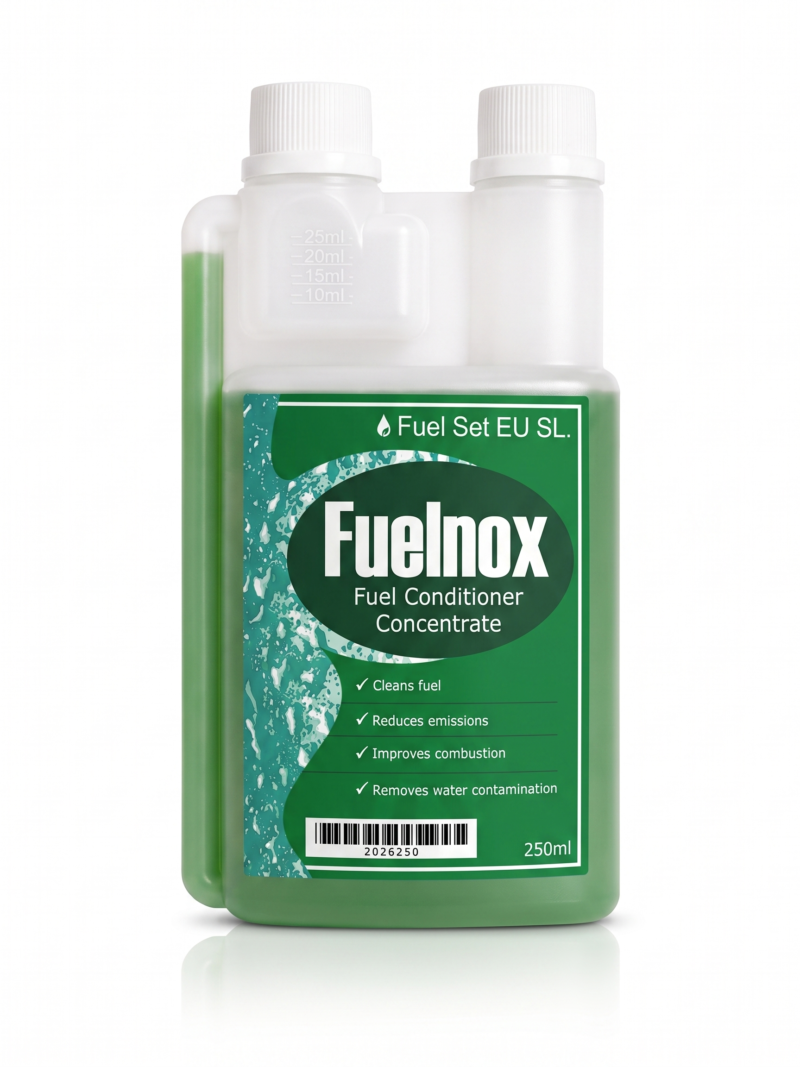
| 250 ml | One engine, about a year | 1,000 L |
| 500 ml | A boat or a car for a full season | 2,000 L |
| 1 litre | A whole garage for a year | 4,000 L |
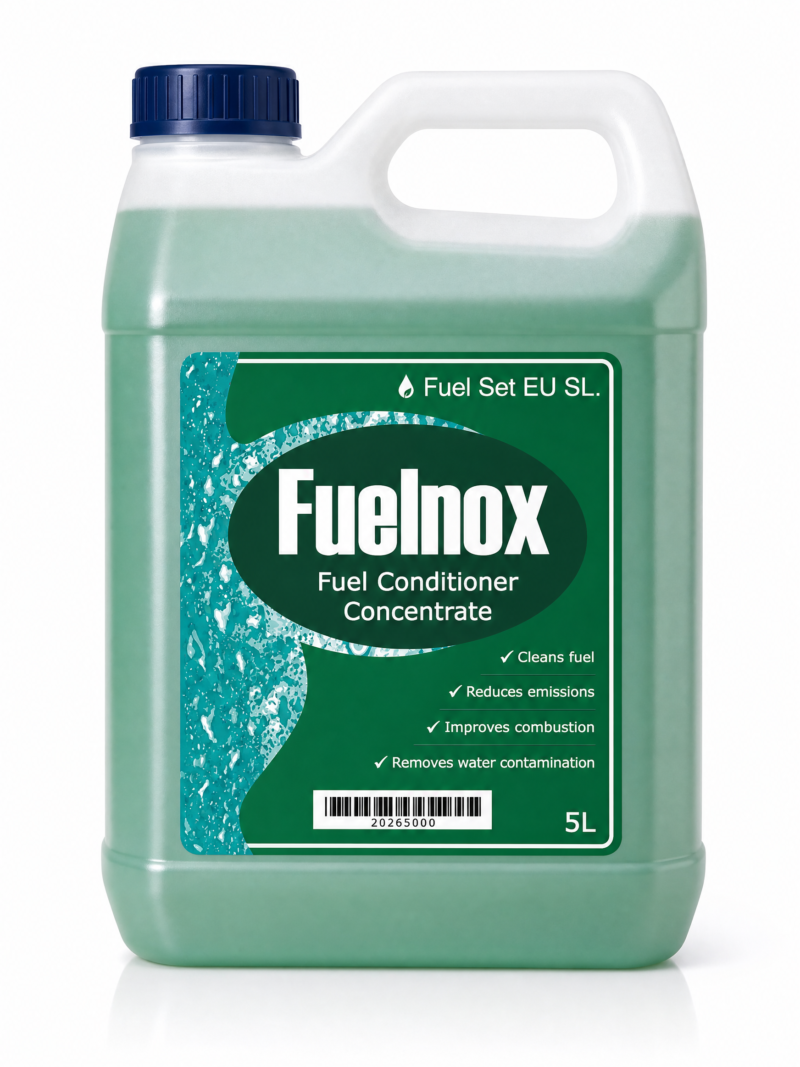
| 5 litres | A fleet or a workshop | 20,000 L |
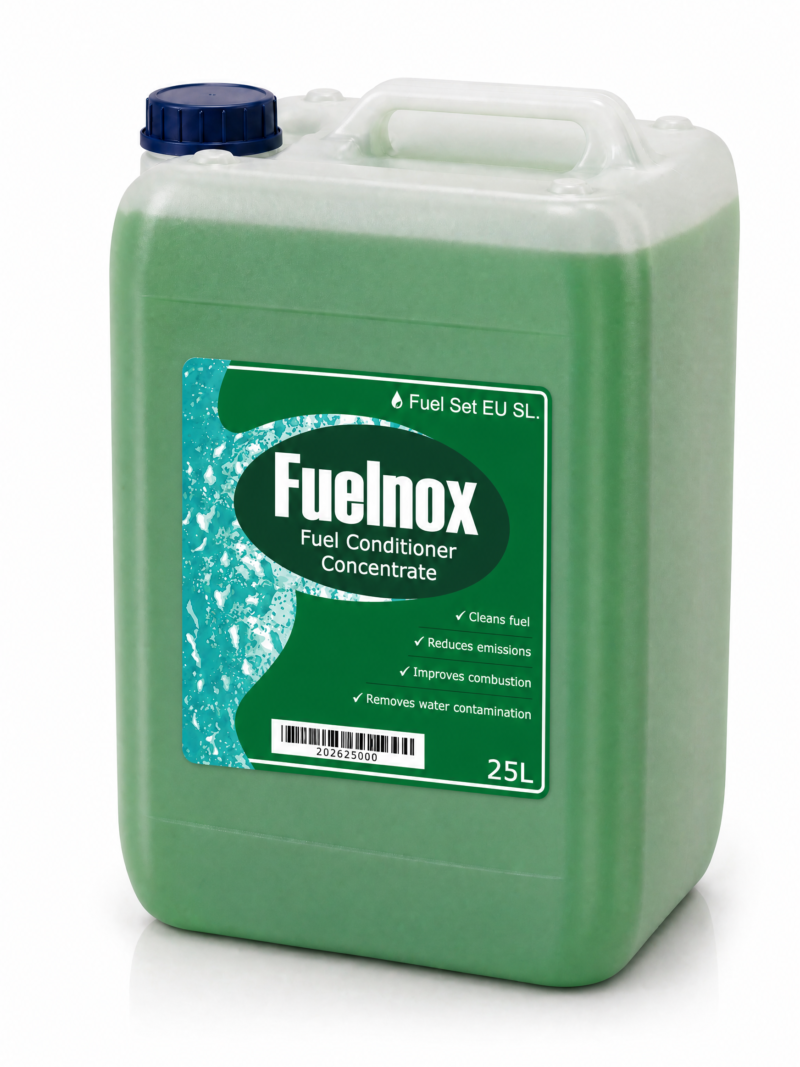
| 25 litres | Bulk tanks and standby fuel | 100,000 L |
Specifications
| Fuels | Petrol, diesel, two stroke. E5 and E10. |
|---|---|
| Safe with | Seals, hoses, carburettors, DPFs, catalytic converters |
| Formulation | Ashless. No sulphur, phosphorus, nitrogen or metallic ingredients. |
| Dose | 1:2000 first treatment, 1:4000 maintenance. One capful is 10 ml. |
| Made in | Spain. Shipped by Fuel Set EU S.L. |
Not for aviation fuels.